
Online partner betrayal trauma therapy in Portland and all of Oregon.
Individual Therapy for Partner Betrayal Trauma in Portland
Specialized Individual Therapy for Partner Betrayal Trauma in Portland
You’ve been rewriting the story of your relationship in your head, trying to figure out which chapters were real.
The long weekend at Cannon Beach where they seemed so present, had it already started? The nights they said they were working late at the office in the Pearl, were they?
You keep recalculating and every answer pulls the rug out from under you a little further. You were building a life with this person in Portland, maybe in Sellwood, maybe in Lake Oswego, and the fact that you didn’t see it shakes something deeper than the betrayal itself: your ability to trust your own perception of anything.
Now ordinary moments have a charge they didn’t used to carry: their phone buzzes and your body reacts before you can think, they mention a coworker and you’re scanning for tells.
The restaurant on Division where you celebrated your birthday, the coffee shop on Alberta where you used to meet on Saturday mornings, your brain can't go to those places without reopening the question of what was real and what wasn’t. So you take different routes, skip the places that used to be yours, because every familiar spot pulls you back into the recalculating.
Images keep intruding, scenes your brain assembled from whatever details you have. They show up while you’re in a meeting, while you’re crossing the Burnside Bridge, while you’re trying to be intimate. Some days you can’t stop seeing them, and other days everything goes flat and you sit through an entire dinner without really being there.
The detective work has consumed you: checking their location, reading old messages, analyzing everything they say for cracks in the story.
Your body has been registering all of this too, teeth grinding, stomach problems, headaches, sleep that barely counts.
The person who made decisions confidently, who enjoyed a walk on Hawthorne or through the Saturday Market without their mind somewhere else, that person feels unreachable.
You may have tried therapy with someone in Portland or Beaverton who helped you understand the “why,” but understanding hasn’t changed what your body does every time their phone lights up.
What Life Looks Like After Partner Betrayal Trauma Treatment
Here’s what my clients describe after 1–5 sessions, once that damage starts to reverse:
You trust your own judgment again. You make a decision about your marriage, your finances, or your living situation and you don’t need to run it past three friends and your sister to make sure you’re not crazy. The fog of “what if I’m wrong about everything” lifts, and you can see your options clearly enough to choose one.
You’re present with the people who matter to you. You sit on the floor and play with your kids without your mind drifting to the affair. You meet a friend for dinner and you’re in the conversation instead of pretending that you’re fine. If you’re rebuilding the relationship, you can have a difficult conversation with your partner without your nervous system preparing to fight, or shutting down. If you’re divorcing, you can co-parent a Saturday morning without spiraling afterward.
Your body stops keeping score. The jaw clenching, the stomach problems, the tension headaches, the 3am wakeups with your heart pounding: those are your nervous system responding to an old threat, not what’s happening. When the trauma resolves, your body follows. You sleep through the night, you eat a normal meal, and you wake up thinking about your day, not about what your partner did.
You get your professional life back. You sit through a meeting or a client call at your office and your mind stays in the room. You write the brief, finish the project, see the patients. The hours you were spending on obsessive investigating and mental replay open back up, and you use them to do your job, build your business, or figure out what’s next.
You start making plans again. You start the conversation with the attorney, or with your partner, or with yourself about what you want your life to look like. The future stops feeling like a looming threat, and starts feeling like something you have the power to shape and influence.
Find out if betrayal trauma therapy is right for you by watching the video here…
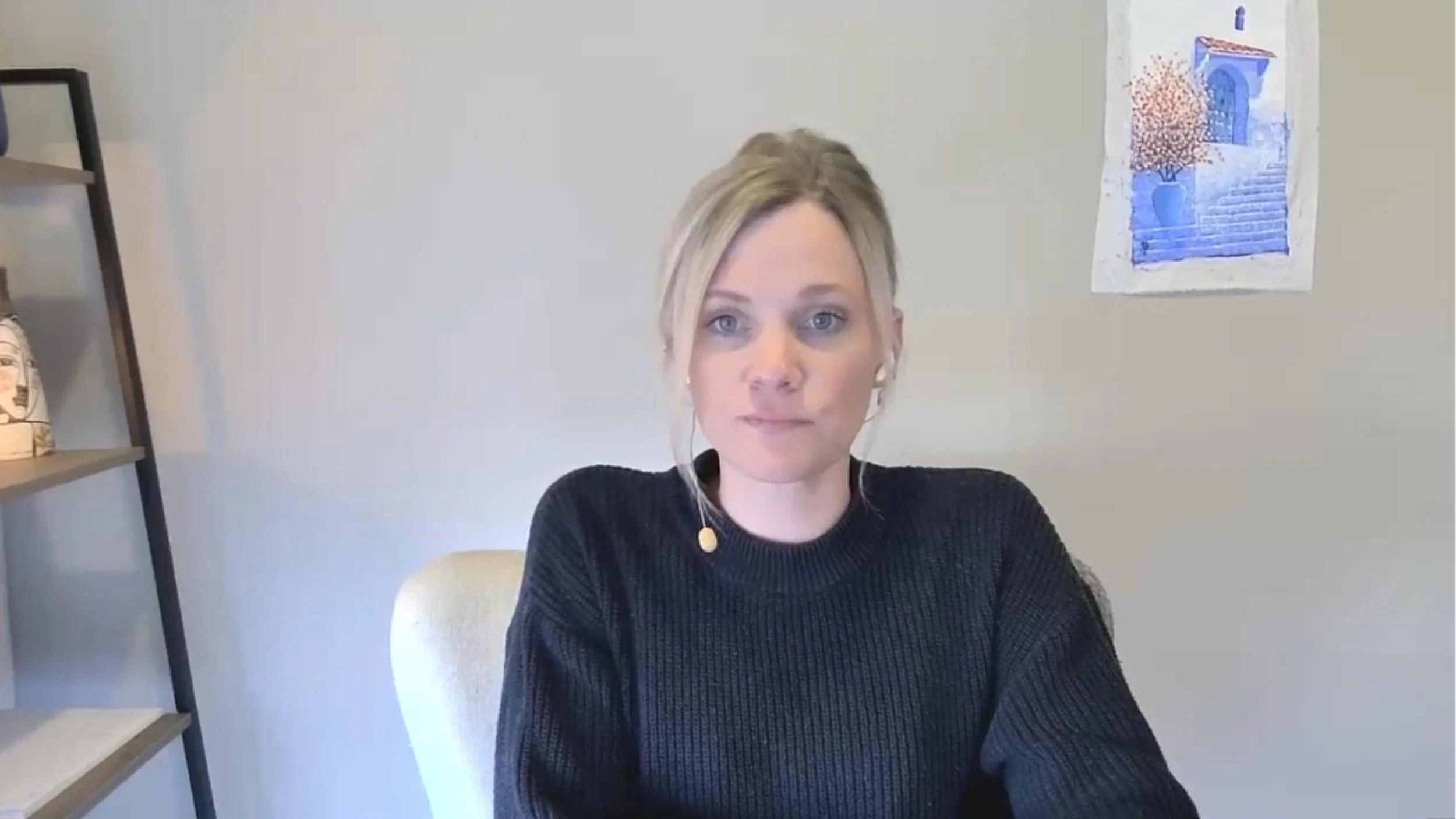
How We Heal Partner Betrayal Trauma at the Root in One Half-Day
Accelerated Resolution Therapy is an evidence-based trauma therapy. It uses back-and-forth eye movements.
You don’t talk about the betrayal in detail. Instead, you visualize the situation in your mind, as if you’re watching a scene of a movie.
During the session, we work to change the images and physical sensations your brain has stored, so that they stop intruding the way they have been.
In ART we say, “keep the knowledge, lose the pain.” You will keep the facts, but the facts will lose their emotional intensity.
By the end of the session, you’ll still know what happened and remember all of the facts. What you’ll lose is the uncomfortable bodily sensations, the unwelcome thoughts, and other symptoms that have been part of your daily life.

About Allyson Clemmons, LICSW
Portland Partner Betrayal Trauma Therapist
My specialization in partner betrayal trauma emerged from years of treating affairs as a couples therapist. While couples work was essential for the relationship, I noticed betrayed partners also needed specialized individual therapy that wasn’t available. They would only find generic trauma treatment that kept them talking in circles for months, while their nervous systems remained hijacked by the betrayal.
I noticed that partner betrayal creates a specific type of trauma that requires targeted treatment. The neurological impact is profound, and it doesn’t resolve through insight or understanding alone.
Now I exclusively use Accelerated Resolution Therapy to help people move from obsessive investigating and constant triggering to genuine peace in just 1-5 sessions. You don’t need to manage partner betrayal trauma indefinitely. You can actually resolve it.
Licensed in Oregon (LCSW #L8072)
100% Online
Get in touch
Self-Schedule or Contact Me Below
If you already know you would like to get scheduled, please do so using my secure, HIPAA-compliant calendar below. No need to contact me first unless you want to.
Here’s how payment and intake forms work —
The intensive is typically ~4 hours and a flat-fee of $1,950.
You’ll use my secure calendar below to choose a date and time for your intensive.
After you book, you’ll receive an email invitation to complete your new client forms, which include your payment details.
Once you sign your forms, your 50% ($975) booking deposit is charged and your intensive date is confirmed. The remaining 50% ($975) is charged 24 hours before your session.
If your forms aren’t completed within 48 hours of booking, you won’t be charged. However, I’ll cancel your appointment and open that date to other clients. You’re always welcome to book a new date once you’re ready to complete the forms.
Have a question about logistics before scheduling?
See my FAQ page, or use the contact form to ask me directly (scroll down to use the form). I respond within 1-2 business days, but usually much faster.
For questions, please contact me using the secure, HIPAA-compliant form below.
Areas served in Portland, Oregon, and the Portland metro area
I’m licensed in Oregon as a Licensed Clinical Social Worker (LCSW #L8072) and in Washington as a Licensed Independent Clinical Social Worker (LICSW #LW61398886), so I see clients by secure, HIPAA-compliant video on both sides of the Columbia River.
In Northwest and Southwest Portland, I see clients in the Pearl District, Northwest District, South Waterfront, Hillsdale, and Multnomah.
In Northeast and Southeast Portland, I see clients in Irvington, Alameda, Grant Park, Laurelhurst, Mt. Tabor, Eastmoreland, and Sellwood-Moreland.
In Washington County, I see clients in Bethany, Cedar Mill, Beaverton, Tigard, Tualatin, Sherwood, and Hillsboro.
South and southeast of Portland, I see clients in Dunthorpe, Lake Oswego, West Linn, Wilsonville, Oregon City, and Happy Valley.
Across the river in Washington, I see clients in Vancouver, Felida, Camas, and Ridgefield.
long-term relief from partner betrayal trauma
—
long-term relief from partner betrayal trauma —