
Online individual therapy after infidelity in Seattle and all of Washington.
Online Individual Therapy for Partner Betrayal Trauma in Seattle
Partner Betrayal Trauma Therapy for Infidelity and Affairs in Seattle
Online individual therapy
You keep going back through your relationship trying to figure out where the lies started. You replay the anniversary dinner where they seemed so happy and the weeks they said work was brutal. You can’t tell which memories belong to the relationship you thought you had, and which belong to the one that was happening.
If you missed something this big while living in the same house, you’re not sure what else you’ve gotten wrong, and you’ve started doubting your read on your own memory.
To make up for what you missed, you monitor your partner’s location, their text and emails, and who’s liking their posts. When their phone lights up on the counter, you’re reading their face before they’ve read the message, and when they’re twenty minutes late, you’ve come up with three explanations before they text. You know the checking takes hours out of your week, but stopping feels like agreeing to be lied to again.
You also imagine scenes you never actually saw, like the two of them at dinner, or a hotel room you’ve pictured from a single credit card charge. You see those images in meetings during the workday, and at 2am. Many times, you end up comparing yourself to the affair partner and asking what they had that you didn’t. Many betrayed partners I’ve worked with describe feeling unwanted, inadequate, and “not chosen,” because your partner had a choice many times over and picked someone else.
Your body shows the stress: your jaw is clenched when you wake up, your stomach stays in knots, and your sleep gets interrupted by nightmares.
Friends have told you the affair says more about your partner than about you, and you may agree with them, at least in theory. But that perspective hasn’t changed the images you keep imagining, or the drop in your stomach when the affair partner’s name comes up. Those images and physical sensations are what we work to change in therapy together.
→ Learn more about my approach to treating partner betrayal trauma here.
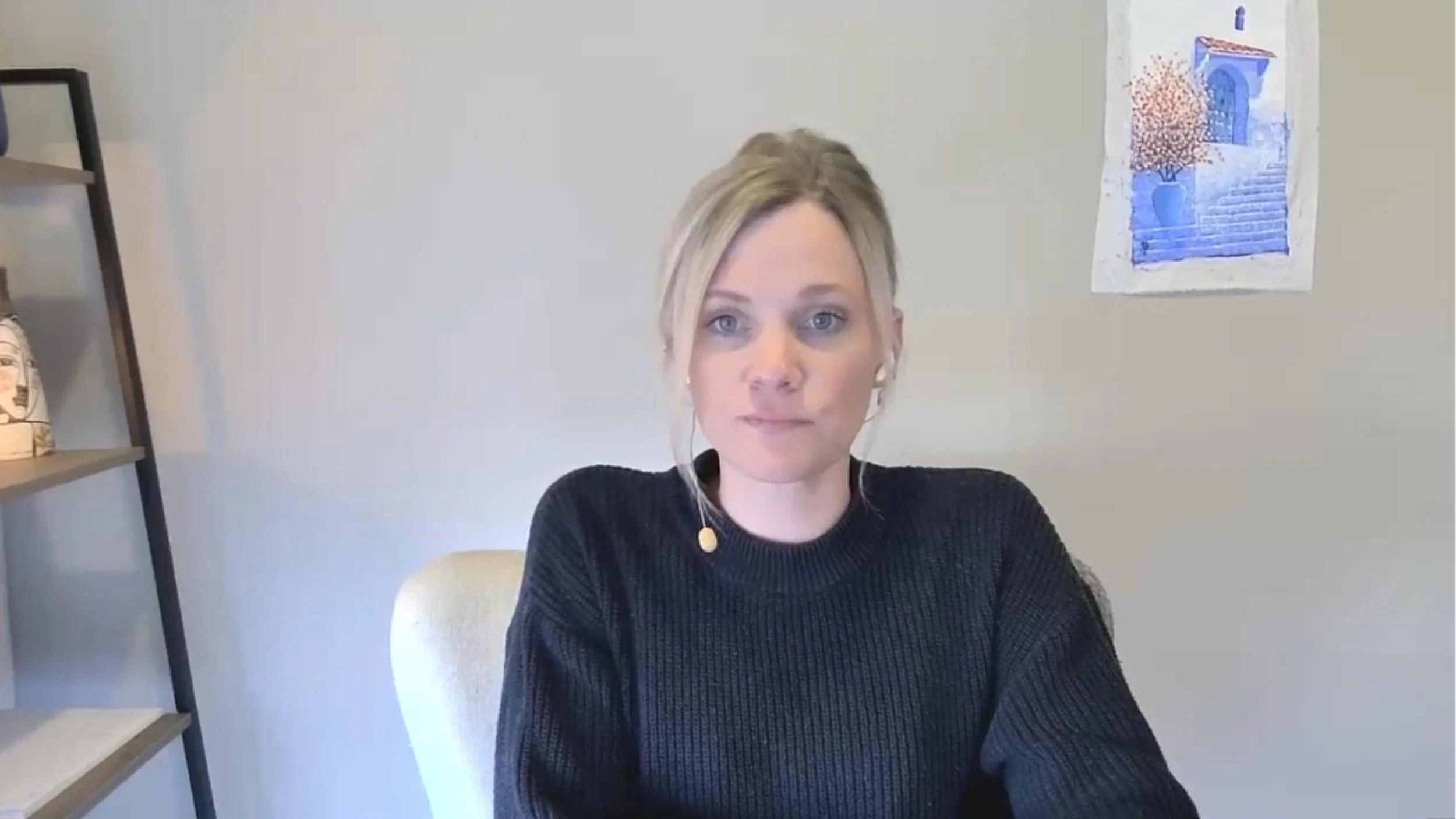
Find out if betrayal trauma therapy is right for you by watching the video here…
Talk Therapy Falls Short for Betrayal Trauma
Accelerated Resolution Therapy is a body-based trauma modality.
The reason it works is because the effects of betrayal “live” in different parts of the brain than insight, skills, and understanding.
Having a clearer understanding of the affair, talking it through, or building better coping skills can be useful, but those don’t fundamentally change how your body responds when looping thoughts of the infidelity pop up in your day-to-day life.
What makes ART different from most therapy is the pace. Change happens within a session rather than across weeks or months, and many clients tend to describe the memories and images becoming more dull and losing their emotional intensity.
What Life Looks Like After You Heal Betrayal Trauma at the Root
Your body stops being on high-alert for more bad news. The jaw clenching, the stomach problems, the tension headaches, the 3am wakeups with your heart pounding stop being your baseline. You sleep through the night and your appetite returns. You wake up thinking about your day, not about what your partner did. The grief about what happened is still there, but it becomes possible for you to concentrate at work and show up for your children.
The images stop popping up. The scenes that have been showing up in your head when you’re trying not to think about them — the texts you found, the moment your partner admitted to the infidelity, the bank statements that didn’t make sense — stop coming up randomly. And when you do think about them, they feel dull. Clients describe the thoughts and images as feeling distant, like something that happened in the past, instead of something that keeps happening to them now. This means the anxiety and rumination stop on their own, without you having to “try.”
You stop measuring your worth by what your partner did. When you think about the affair now, you think of it as something your partner decided to do, and you stop asking what’s wrong with you every time the memory comes up. You can see the affair partner’s photo and feel sad for a minute instead of spending the evening comparing yourself to them. Whether or not your partner chooses you going forward, you know you’re worth choosing, and you can see that belief reflected in your week: you accept a compliment without downplaying it, you speak up in the work meeting, and you book the trip or go on the date you stopped believing you deserved.
You trust your own judgment again. You make a decision about your marriage, your finances, or your living situation, and you don’t need to run it past three friends and your sister to make sure you’re not crazy. The fog of “what if I’m wrong about everything else, too?” clears, and you can see your options clearly enough to choose. The intrusive thoughts that have been telling you not to trust your partner, not to trust yourself, that you’re going to make a permanent mistake, lose their intensity. You can recognize them as betrayal-driven, not as truth, and they don’t dictate what you do next.
You have bandwidth to spend on the people you love. Your daughter tells you about her math test on Friday afternoon, and instead of “how was it, mm-hm, that’s great,” you’re listening. As she’s talking, you notice she’s gotten taller. If you’re rebuilding your relationship, you can sit across from your partner and have the hard conversation without feeling like you’re going to throw up. If you’re leaving or if your partner left, you can sleep through your first night in the new place without staring at the ceiling, replaying every sign you missed.
The facts of the betrayal don’t disappear, and you’ll still remember what happened. You’ll think about the discovery, the texts, or the affair partner as something that happened in the past instead of something that keeps happening to you.
If you’re ready to learn about pricing and scheduling, see the fees page.
How We Heal Partner Betrayal Trauma at the Root in One Half-Day
Accelerated Resolution Therapy (ART) is an evidence-based trauma therapy.
You don’t talk about the betrayal in detail. Instead, you visualize the situation in your mind, as if you’re watching a scene of a movie, and use back-and-forth eye movements to “process” out the unwanted sensations and emotions.
During the session, we work to change the images and physical sensations your brain has stored, so that they stop intruding the way they have been.
In ART we say, “keep the knowledge, lose the pain.” You will keep the facts, but you’ll lose the uncomfortable bodily sensations, the unwelcome thoughts, and other symptoms that have been part of your daily life.
Serving Seattle clients via secure, HIPAA-compliant telehealth
Online Individual Therapy for Partner Betrayal Trauma in Seattle
I provide online betrayal trauma therapy to clients anywhere in Washington. Because every session is online, you can meet with me from wherever you are in the Seattle area.
Central Seattle and downtown: Capitol Hill • First Hill • Central District • Madison Park • Madison Valley • Montlake • Madrona • Leschi • Eastlake • South Lake Union • Belltown • Downtown
North Seattle: Ballard • Fremont • Wallingford • Green Lake • Phinney Ridge • Greenwood • Roosevelt • Ravenna • University District • Laurelhurst • Wedgwood • Maple Leaf • Northgate • Lake City
West Seattle and the northwest hills: Queen Anne • Magnolia • Alki • Admiral • Fauntleroy • West Seattle Junction
South Seattle: Beacon Hill • Columbia City • Mount Baker • Seward Park • Rainier Beach • Georgetown
Nearby communities: Shoreline • Lake Forest Park • Edmonds • Burien • Renton • Tukwila • Bainbridge Island • Vashon Island
Also serving the Eastside (Bellevue, Redmond, Kirkland, and more)

About Allyson Clemmons, LICSW
Individual therapist for partner betrayal trauma in Seattle
My specialization in partner betrayal trauma emerged from years of working with couples after affairs and infidelity. While couples work was essential for the relationship to heal, I noticed betrayed partners also needed specialized individual therapy that wasn’t available. They would only find generic trauma treatment that kept them talking in circles for months, while their nervous systems remained hijacked by the betrayal.
I noticed that partner betrayal creates a specific type of trauma that requires targeted treatment. Whether it’s infidelity, family betrayal, or professional betrayal, the neurological impact is profound, and it doesn’t resolve through insight or understanding alone.
Now I exclusively use Accelerated Resolution Therapy to help people move from investigating and constant triggering to genuine peace in just 1-5 sessions. You don’t need to manage partner betrayal trauma indefinitely. You can actually resolve it.
Independently licensed in Washington State: #LW61398886
100% Online
-
No. All of my sessions are online, so you can meet with me from anywhere in the greater Seattle area without driving across town or sitting in a waiting room.
I’m independently licensed in Washington (#LW61398886), so you can meet with me if you’re located outside Seattle, too.
-
You need to be physically located in a state where I’m licensed or registered on the day of your intensive, which means Washington, Oregon, Massachusetts, Florida, or Colorado.
If you live in Seattle and travel for work, you can schedule your intensive for a day you’ll be home, or for a day you’ll be in one of those other states.
-
You should plan to set aside about 4 hours. Make sure you have privacy, and a screen big enough to move your eyes back and forth (a laptop or desktop is preferred).
I’ll start by asking a few brief questions about your situation and symptoms. Then, we move into processing the betrayal trauma using ART.
ART is gentler than most people expect, though strong emotions do arise.
I’ve written additional details about what to expect in my brief explanation about ART intensives for betrayal trauma.
Get in touch
Self-Schedule or Contact Me Below
If you already know you would like to get scheduled, please do so using my secure, HIPAA-compliant calendar below. No need to contact me first unless you want to.
You’ll choose your preferred day and time for your intensive and pay your booking deposit. Within 24 hours, you’ll receive an email invitation to complete your new client forms. Then we’ll meet on your scheduled day!
Have a question about logistics before scheduling?
See my FAQ page, or use the contact form to ask me directly (scroll down to use the form). I respond within 1-2 business days, but usually much faster.
For questions, please contact me using the secure, HIPAA-compliant form below.
long-term relief from betrayal trauma
—
long-term relief from betrayal trauma —