
Online Therapy Across Massachusetts, Washington State, & Oregon
Trauma-Informed Addiction Counseling
Finally, Treatment That Heals the Root Cause of Addiction
You’ve noticed a pattern:
The drinking ramps up before holidays or upcoming family gatherings
The urge to use hits hardest when you’re alone with your thoughts at 3am
There’s a crushing feeling in your chest that only substances seem to ease, even if just for a few hours
This isn’t about willpower. You already know that.
Your Body Decides to Use Before You Know Why: October comes, and you’re drinking heavier without planning to. You drive past that one intersection and feel the pull toward the liquor store. Your kid hits a certain age, and you notice you’re using more. The pattern is clear when you look back, but in the moment, it seems to just happen.
Certain Situations: Your boss sounds disappointed, and you stop for drinks on the way home. Someone touches you unexpectedly, and you need a drink to shake it off. A smell triggers something, and you’re reaching for your pill bottle. There’s a direct line from these specific moments to using substances.
The Same Nightmare Over and Over: It’s always the same dream: your childhood home, that one night, or the accident. You wake up drenched in sweat. The only way to stop the dreams is to pass out drunk or high. Regular sleep means seeing it again. So you don’t do regular sleep.
Your Marriage is Breaking Down Because of Your Substance Use: Your spouse asks you to open up, but you can’t have that conversation without a few drinks first. They want to be intimate, but you need to be buzzed or it feels like too much. Date nights mean pre-gaming. Serious talks require liquid courage. They see you drinking before every important moment and think you’re choosing substances over them. You can't explain that, without substances, emotional intimacy feels too risky.
Sex and Substances Go Together: Maybe you need a couple of drinks to relax enough for sex. Or you always get high after because you feel weird about what just happened. Or drunk sex is the only kind that doesn’t make you squirm. Your partner notices you’re not fully present during intimacy, and they think it’s about them. Really, you just don’t know how to handle that level of vulnerability and exposure without something to take the edge off.
Parenting Is Harder Without Substances: You notice you’re pouring wine during homework time. Bedtime routines go smoothly after you've taken something. Weekend sports mean bringing a thermos that isn’t just coffee. It’s not that you can’t parent sober; it’s that everything feels a lot more manageable and less overwhelming when you’ve taken the edge off.
Your Body Overreacts to Normal Things: Loud noises make you jumpy for the next hour. You take your anxiety meds more than prescribed because your body stays tense all day. People think you’re anxious or high-strung. Substances help dial down the constant edginess.
You’ve Tried to Stop On Your Own, But There Are Real Limitations to the Traditional Approaches Used to Treat Substance Use & Addiction…
Traditional Treatment That Stayed Surface-Level: Your outpatient group therapist had you make timelines, list triggers, and practice saying no when someone offers you a drink. But when it came to the root cause of why you drink or use, they suggested journaling and box breathing.
Therapy That Made Things Worse or Took Forever: EMDR made you damn-near hyperventilate. You relived your worst moments without feeling any better afterward. Or, you tried talk therapy: two years of weekly appointments, slowly understanding the connections, processing your childhood. But understanding why you use doesn’t make the feelings stop.
Psychiatric Medication Cocktails: Zoloft for depression, Prazosin for nightmares, Xanax for panic (until they worried you were getting addicted to that too). You became a walking pharmacy, but underneath all that medication, you can still feel the anxiety, and you find yourself continuously checking over your shoulder. So you add your own medication on top.
Harm Reduction or Moderation: You tried to manage it: Only drink after the kids are in bed, only use on weekends, switch from hard alcohol to beer, or from pills to weed. But trauma doesn’t follow those rules. When your nervous system gets triggered, all your careful plans disappear.
This is exactly when Accelerated Resolution Therapy (ART) becomes most effective: it addresses the underlying trauma in a way that just staying sober simply can’t.
Accelerated Resolution Therapy Helps You Process Upsetting Experiences Without Reliving Them in Detail
Here’s what makes ART different from talking about your trauma for months or years:
Speed and efficiency that matches your life — Most clients see significant relief from triggers and cravings in 3-5 sessions. Not 3-5 years. 3-5 sessions.
Privacy and discretion — You don’t have to describe the painful details. Keep the parts that feel too raw to share. Your brain knows what happened; we just help it file the experience differently.
Impressive research findings —
94% of people complete ART treatment (compared to 60% for traditional therapy)⁴
Veterans with combat PTSD: 61% showed major improvement⁵
Effect sizes 2-4 times stronger than traditional therapy (1.12 to 3.28 for the research-minded)⁶ — traditional evidence-based therapy scores around 0.8 (which is considered good)
A landmark study of 43,000 people found that unresolved trauma is the single strongest predictor of addiction. Veterans with PTSD are 75% more likely to have substance use disorders. Adults who experienced childhood adversity show up to 10 times higher rates of addiction.
But here’s the hope: When trauma resolves, substance use naturally decreases. Studies show that for every unit of trauma symptom improvement, the odds of heavy substance use drop by over 400%.
Healing through ART is like the difference between looking at an old photo versus being trapped inside it.
How your brain heals itself (with a little guidance)…
Step 1 — Pick a specific memory or feeling. For clients looking to stay sober, we will also pick the earliest time you remember using substances.
Step 2 — Hold the memory during bilateral stimulation, like watching scenery from a train window while your brain sorts through its filing system.
Step 3 — Choose new images to replace the painful ones. Your brain keeps the facts but drops the emotional charge.
The Evidence is Clear: ART Creates Profound Change
What Research Shows About ART’s Effectiveness
Military Veterans Study (2013)⁷ — A randomized controlled trial with combat veterans showed 61% response rate for PTSD symptoms. These are veterans who often struggle with traditional therapies, yet over half experienced significant improvement with ART.
Complicated Grief Research (2021)⁸ — Effect sizes reached 2.13 for PTSD symptoms and 1.79 for grief symptoms. To put this in perspective, an effect size over 0.8 is considered “large.” ART’s numbers are extraordinary.
Treatment Completion Rates⁹ — 94% of clients complete ART treatment. Compare this to 60-65% completion rates for traditional PTSD therapies. People stick with ART because they feel better quickly.
Recent Cancer Survivor Study (2024)¹⁰ — Preliminary results show promising outcomes for medical trauma, expanding ART’s applications beyond traditional PTSD.
Systematic Review Findings¹¹ — Across multiple studies, ART consistently shows effect sizes ranging from 1.12 to 3.28 (remember, 0.8 is considered “good.”).
Stop White-Knuckling and Start Living
How does this work?
We’ll meet online for 2 sessions/week for the first 2 weeks.
Using smooth eye movements (similar to what happens in REM sleep), we’ll help your brain process what needs to be processed. You stay in complete control; you don’t have to share details you’re not ready to share.
Most people describe the outcome of ART like this: “The facts of what happened are still there, but the experience doesn’t hurt anymore. It’s just something that happened, not something that is still happening.”
When the underlying trauma is resolved, the need for substances can naturally fade: not through willpower or fighting yourself, but because you simply don’t need the escape hatch anymore.
What changes after our work together…
The triggers lose their power — October comes and goes without you noticing until November. You drive past that intersection while singing along to the radio. Your boss uses that disappointed tone, and you just think “what a jerk” instead of stopping at the bar. The nightmares stop: not fewer, not softer, they’re simply gone.
Your body finally relaxes — That constant tension between your shoulder blades releases. You sleep through the night without jolting awake drenched in sweat. Your stomach stops clenching before family dinners. You realize you haven’t clenched your jaw in weeks. When someone comes up behind you, you turn around instead of jumping. Your hands are steady. The hypervigilance that exhausted you for years just... stops.
Your marriage heals — You can have difficult conversations without liquid courage. Arguments are about the actual issue, not your trauma response to conflict. Your spouse reaches across you in bed, and you don't flinch. Date nights don’t require showing up preemptively buzzed. For maybe the first time, emotional intimacy doesn’t feel scary. Your partner gets to be with the real you, not the person managing trauma through substances.
Parenting doesn’t require substances — Evening routines happen without wine or pills. You’re present at soccer practice instead of sneaking sips from a thermos. The overwhelming feeling of parenting shifts to normal parental stress: annoying but manageable without substances.
You get to choose — The desperate, frantic need disappears. The substances stop serving their purpose because there’s nothing to escape from. Pills expire in your cabinet. That emergency stash stays untouched. Not through willpower or white-knuckling; you just forget because you don’t need it anymore.
ART is an investment in your freedom and well-being.
A 90-minute Accelerated Resolution Therapy session is $500.
ART sessions are $500 per session. Each session runs as long as needed to complete the protocol, typically 60-90 minutes. The average length of treatment is 3-5 sessions for most issues, though complex issues can take longer.
Please note: to manage triggers and cravings, we’ll need to meet twice per week for 2 weeks.
This is not for you if…
You’re only looking for addiction counseling because someone else (your spouse, a judge, your boss, etc.) wants you to
You’re actively physically dependent and need medical detox
You’re not ready to let go of what substances do for you
You’re looking for medication management or psychiatric support
This is for you if…
You’re tired of treatment that addresses the behavior of substance use, but ignores what drives it
Part of you senses your use is connected to trauma, depression, or anxiety, even if you can’t fully explain it
You are not physically dependent
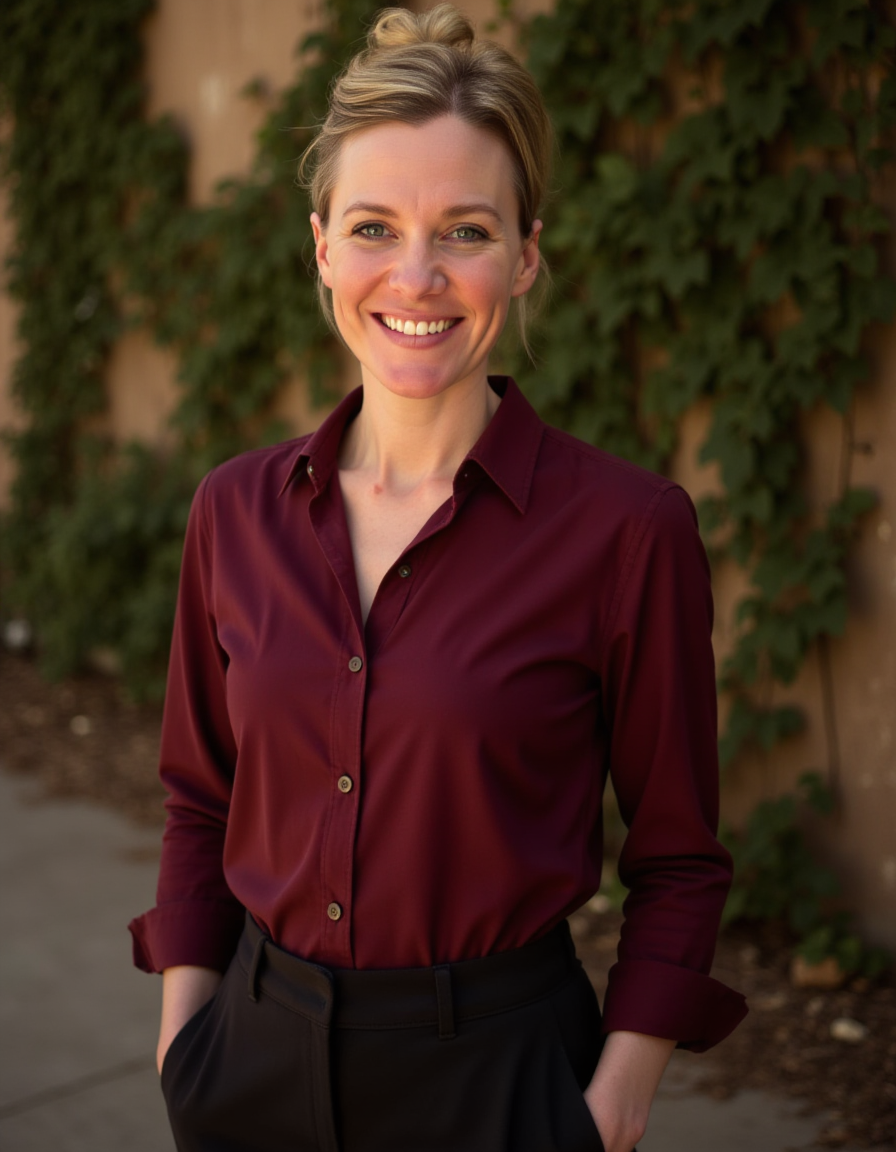
About Allyson Clemmons, LICSW
Real healing happens in the nervous system, not just in conversation.
With 12 years of specialized addiction counseling experience, including intensive work in Juvenile Drug Court, I’ve witnessed firsthand the relationship between trauma and substance use. After seeing countless clients cycle through treatment without addressing the root cause, I now use ART to target the traumatic memories that drive substance use.
If you’ve tried to quit on your own but trauma keeps pulling you back, my approach is different. Let’s resolve what drove you to use in the first place.
Licensed in Massachusetts, Washington State, & Oregon
100% Online
Get in touch
Contact or Self-Schedule Below
If you already know you would like to get scheduled, please do so using the button below. No need to contact me first unless you want to.
The link will take you to my secure, HIPAA-compliant scheduling tool where you can choose a day and time and pay for your session to reserve it. Within 24 hours, you’ll receive an email invitation to complete your new client forms. Then we’ll meet on your scheduled day!
Have questions before scheduling?
Use this form to ask about whether ART is right for your situation, how the process works, or anything else you’d like to know. I typically respond within 24-48 business hours.
FAQs
Frequently asked questions
-
ART works best for people who are genuinely ready to resolve their problem. If there are secondary benefits to keeping the problem (like avoiding certain responsibilities or getting extra attention/care), or if someone isn't fully committed to change, ART may not be effective.
ART is most successful when clients are motivated to put the issue behind them. -
Great question! You don’t need to be a strong visualizer for ART to work. The three things needed for a successful session are: the ability to move your eyes comfortably left and right, the ability to hold a thought or image (even a vague one), and motivation to resolve the issue.
Many clients worry about this, but you can “think your way through” the problematic scene or thought, rather than needing vivid mental pictures. ART works with whatever way your mind naturally processes information.
-
I'm so glad you're interested in working together!
I don't offer consultation calls due to my scheduling constraints.
Instead, I've included comprehensive information about working with me on my website so that you can get all your questions answered immediately.I am also in the process of adding video content to my Therapy Service pages as an alternative way of consuming the information (and so that you can get a feel for what it's like to work with me on video!).
Of course, there will always be unique circumstances. If you don't know which service best fits your situation, or you have a question that isn't answered on the Therapy Service pages, please feel free to reach out via the Contact Form below.
-
Unfortunately, no. I live in Mexico, and therefore ALL of my work is 100% online. I use HIPAA-compliant video software to meet with clients, so we’ll be able to see each other during the session.
-
My fee is a flat $500 for an ART session.
-
Most issues are resolved in just 1-5 sessions, depending on complexity. Simple issues like needle phobia or a single traumatic incident typically only need 1 session, while more complex issues like complex PTSD, social phobia, addiction, or OCD may take 4-5 sessions.
Session length is typically between 60-90 minutes. This gives us enough time to complete the full ART process without feeling rushed.
For most issues, weekly ART sessions will suffice. The exception to that is addiction, in which case we will need to meet 2x a week for 2-3 weeks.
For clients who want faster results, ART intensives are also available. An intensive is 4+ hours in one day and can address multiple "scenes" or complex issues all at once. There is a cost difference for intensives, but they allow you to complete your entire treatment in a single day or a weekend, rather than spreading it across several weeks.
-
ART sessions are 90 minutes to ensure we have enough time to complete the full process without feeling rushed. While some sessions may only take 60-75 minutes, others require the full 90 minutes if we discover additional “scenes” or underlying issues during the process.
This longer timeframe allows for thorough resolution rather than having to stop mid-process and continue in another session. You'll only be charged the flat $500 fee.
-
No, I am not in network with any insurance company. (You may sometimes see my name on outdated provider lists, but I left insurance networks in 2022.)
-
Yes, but please be aware that insurance reimbursement varies significantly by plan, and my 90-minute sessions does not fit standard insurance session length expectations (typically 53 minutes).
You are responsible for paying at the time of service, and my record system will email you a Superbill automatically once per month (by request only).
-
When you schedule a session, payment is required at the time of booking to hold your spot. For any additional sessions I schedule for you, your card will be automatically charged within 24 hours before the appointment time. Credit cards are securely stored in your private client chart.
-
I am currently seeing ART clients on Thursdays from 6am to 4pm Pacific Time. I will be opening additional session options as they become available.
ART intensives are available outside of my typical Thursday schedule but will need about 2 weeks' notice to arrange. -
Once you request a session either via email or using the self-scheduling widget above, I will send you your new client forms. (These forms come from my electronic record system, not my email.)
You are responsible for reviewing and digitally signing them at least 72 hours in advance of your scheduled appointment to avoid an auto-cancellation.
If you don’t receive these forms, please reach out to me at allyson@allysonclemmonslicsw.com.
-
Please use my self-scheduling link HERE to schedule your first session.
heal the root cause in 1-5 sessions
—
heal the root cause in 1-5 sessions —